
Chronic social isolation is a physiological threat, not merely an emotional state; it actively triggers inflammatory and neurodegenerative processes comparable to major clinical risk factors.
- Scientific data shows loneliness accelerates cognitive decline, increases cardiovascular strain, and weakens the immune system at a cellular level.
- Observable behaviors, from hearing loss to solitary eating, are not just lifestyle choices but critical indicators of escalating health risks.
Recommendation: Treat social engagement as a medical necessity. Addressing the root causes—from sensory impairment to environmental barriers—is a crucial preventative health measure.
The comparison is not an exaggeration; it is a clinical warning. For decades, public health has focused on tangible threats like nicotine, cholesterol, and a sedentary lifestyle. Yet, a silent epidemic has been unfolding, one that dismantles human health from the inside out with the same devastating efficiency. That epidemic is chronic social isolation. While many dismiss loneliness as a simple matter of feeling sad or disconnected, a vast body of evidence now classifies it as a profound physiological stressor. It triggers chronic inflammation, elevates stress hormones like cortisol, and directly contributes to high blood pressure and heart disease, mirroring the pathological pathways of heavy smoking.
The common advice to “join a club” or “call a friend” fails to grasp the gravity of the situation. It’s like telling a smoker to “just breathe fresh air.” It ignores the deep, systemic damage already underway. This is not about a lack of willpower; it’s about a biological state of emergency. The true danger of isolation lies in its invisibility. Unlike a pack of cigarettes, it has no warning label. It masquerades as a preference for privacy or a consequence of modern life, all while eroding the very foundations of our physical well-being.
This analysis moves beyond the emotional narrative. We will dissect the hard data and physiological mechanisms that make loneliness a top-tier public health risk. We will explore why urban environments can be more isolating than rural ones, how untreated hearing loss starves the brain, and why eating alone can trigger dangerous nutritional deficits. The objective is not to induce fear, but to reframe the conversation. Social connection is not a luxury; it is a biological imperative, as essential to our survival as the air we breathe. Understanding this is the first step toward taking meaningful, life-saving action.
To fully grasp the scale of this public health issue, this article breaks down the distinct physiological and environmental factors that transform solitude into a critical health risk. The following sections provide a data-driven examination of each component.
Summary: Deconstructing the Physiological Impact of Social Isolation
- Why Social Disengagement Accelerates Dementia Symptoms by 50% in 3 Years?
- How to Spot the “Invisible” Isolated Neighbor Who Never Asks for Help?
- High-Rise Hermits: Why City Seniors Are Often More Isolated Than Rural Ones?
- The “Tea and Toast” Syndrome: How Eating Alone Leads to Dangerous Weight Loss
- How to Take the First Step Out the Door When You Haven’t Socialized in Weeks?
- The Sedentary Trap: How 4 Hours of TV Daily Accelerates Cognitive Decline by 20%
- The Brain Drain: Why Untreated Hearing Loss Triples Your Risk of Cognitive Decline?
- How to Make New Friends After 60 When You Don’t Like Bingo or Bridge?
Why Social Disengagement Accelerates Dementia Symptoms by 50% in 3 Years?
The link between social engagement and cognitive health is not coincidental; it is causal. The brain is a use-it-or-lose-it organ, and social interaction is one of its most complex and demanding workouts. Engaging in conversation, interpreting non-verbal cues, and recalling shared memories all stimulate neural pathways that build cognitive reserve—the brain’s resilience against age-related damage. When this stimulation is withdrawn, the brain’s functional capacity begins to atrophy. This state, known as social frailty, is now recognized as a potent and independent risk factor for neurodegeneration.
Hard data confirms this alarming connection. Groundbreaking research from the Journal of Gerontology reveals that seniors experiencing social frailty face a 50% higher risk of developing dementia over just a few years. This isn’t just about feeling lonely; it’s a measurable decline in social resources, contact, and activities that directly precedes cognitive collapse. The lack of social input means the brain is not being challenged, leading to a faster and more severe manifestation of dementia symptoms in those who are already predisposed.
This process of decline can be mitigated. As Dr. Suraj Samtani, a key expert in the field, stated during his work for National Geographic:
Social connections slow down cognitive decline even for people who have been already diagnosed with dementia.
– Dr. Suraj Samtani, National Geographic
This finding underscores a critical public health message: social engagement is not merely a pleasant pastime but a vital therapeutic tool. It actively works to preserve brain structure and function. For an individual who values their independence and cognitive sharpness, maintaining social ties must be viewed as a non-negotiable component of their long-term health strategy, as critical as managing blood pressure or diet.
How to Spot the “Invisible” Isolated Neighbor Who Never Asks for Help?
Chronic isolation is often a silent condition. The individuals most at risk are frequently those who, valuing privacy and self-reliance, will never ask for help. They become “invisible” in plain sight, withdrawing so gradually that their disappearance from community life goes unnoticed until a crisis occurs. Recognizing the early signs requires a shift from passive observation to active awareness of subtle behavioral and environmental changes. These are not overt cries for help, but quiet signals of a pre-emptive withdrawal from social connection.
This withdrawal is not random; it follows a predictable pattern. It often begins with a reduction in routine activities—the daily walk to the corner store ceases, the car remains parked for days on end, or the regular presence at a community gathering fades. This is followed by an avoidance of casual social contact. A person who once offered a brief nod or hello in a shared hallway may now avert their gaze or wait for the corridor to be empty. These are not signs of rudeness but are often manifestations of social anxiety or a diminished capacity to engage.
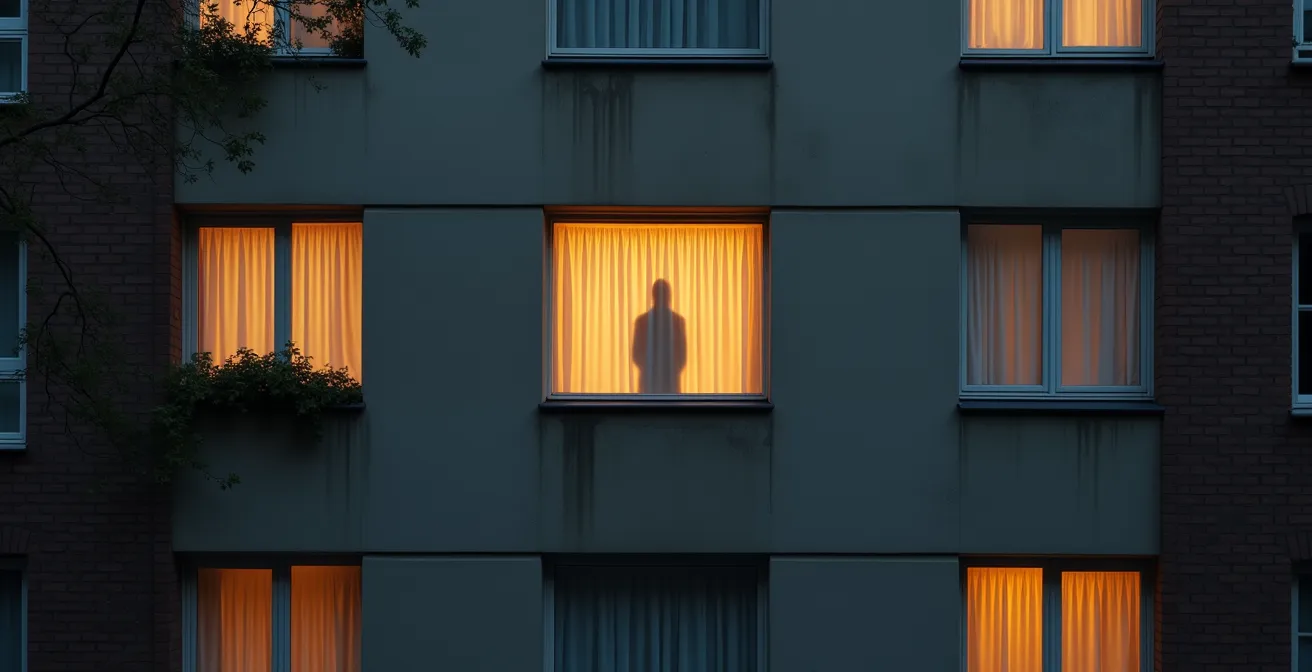
The environment itself often mirrors the internal state of the isolated individual. Neglected gardens, permanently drawn curtains, or an accumulation of unopened mail are physical manifestations of retreat. These clues are critical because they are objective. They provide a tangible basis for concern, moving beyond subjective feelings and allowing for a non-intrusive assessment of a neighbor’s potential distress. Recognizing these signs early is the first step in being able to offer support in a way that respects privacy while acknowledging a clear, data-driven health risk.
Checklist: Identifying Signs of Pre-emptive Withdrawal
- Routine Breaks: Watch for sudden stops in routine activities like morning walks or regular shopping trips.
- Contact Avoidance: Notice consistent avoidance of eye contact in hallways or common areas.
- Environmental Mirroring: Observe neglected gardens, empty balconies, or permanently drawn curtains.
- Communication Shifts: Pay attention to a change from brief greetings to complete silence or apparent non-recognition.
- Mail & Deliveries: Look for unopened mail accumulating or newspapers piling up outside the door.
High-Rise Hermits: Why City Seniors Are Often More Isolated Than Rural Ones?
The paradox of modern urban living is that social density does not guarantee social connection. For many seniors, the city’s anonymity and architectural design create a more profound sense of isolation than a rural setting ever could. While rural communities often foster interdependence and spontaneous interaction, urban environments can inadvertently engineer solitude. This phenomenon of the “high-rise hermit” is a growing public health concern, rooted in the very structure of city life.
A comparative analysis reveals several key factors. Urban architecture, with its long, anonymous corridors and reliance on elevators, minimizes the opportunities for the casual, unplanned encounters that build community. In contrast, rural settings with porches, yards, and central community hubs naturally facilitate these interactions. Furthermore, the high sensory input of a city can be overwhelming for older adults, leading to a defensive withdrawal into the controlled, quiet environment of their apartment. This is compounded by the instability of urban social networks, where high population mobility and gentrification can dismantle long-standing support systems that are typically more stable in rural areas. The scale of the problem is significant, as data from the Administration for Community Living shows that 28% of older adults live alone, a massive increase from just 6% in 1900, with urban centers seeing the highest concentrations.
This table, based on findings from geriatric research, starkly illustrates the structural disadvantages faced by urban seniors. It highlights how the built environment itself can become a primary driver of social isolation.
| Factor | Urban Seniors | Rural Seniors |
|---|---|---|
| Architecture | Long corridors, elevator dependence, lack of communal spaces | Porches, yards, natural gathering spots |
| Social Density | Paradox of density – overwhelming sensory input leads to withdrawal | Lower density encourages interaction |
| Network Stability | High mobility, gentrification disrupts historical support systems | More stable, long-term community ties |
| Spontaneous Encounters | Limited by design, fewer chance meetings | More frequent casual interactions |
The implication for public health and urban planning is clear: creating age-friendly cities requires a conscious effort to design spaces that foster connection, not just density. For the individual senior, recognizing these environmental barriers is the first step toward strategically seeking out the pockets of community that do exist within the urban landscape.
The “Tea and Toast” Syndrome: How Eating Alone Leads to Dangerous Weight Loss
The “Tea and Toast” Syndrome describes a dangerous pattern of nutritional decline common among isolated seniors. It is not a sign of poverty or a lack of access to food, but a direct physiological consequence of eating alone. When the social component of a meal is removed, food can lose its appeal, leading to a gradual and often unnoticed reduction in caloric and nutritional intake. This is not a psychological choice but a biological response. The act of sharing a meal is deeply tied to the brain’s reward system, and its absence can effectively blunt one’s appetite and motivation to prepare proper meals.
The science behind this phenomenon is compelling. As leading researcher Dr. Julianne Holt-Lunstad explains, the neurochemical rewards of eating are diminished in isolation:
Eating is not just for fuel; it’s a primary reward mechanism linked to dopamine release. When the social component is removed, food loses its pleasurable dimension.
– Dr. Julianne Holt-Lunstad, Brigham Young University Research
This loss of pleasure leads individuals to opt for simple, low-effort foods like tea and toast, which are calorically poor and lack essential nutrients. Over time, this results in unintended weight loss, muscle atrophy (sarcopenia), and a weakened immune system, creating a cascade of health problems. The societal cost is tangible and alarming; AARP research indicates Medicare spends an extra $134 more per month on socially isolated seniors compared to their connected peers, a cost largely driven by the complications arising from malnutrition and related frailty.
Therefore, a consistent pattern of solitary, simplistic meals should be viewed as a critical medical red flag. It signals a breakdown in a fundamental biological process. For the senior who values their independence, ensuring they have regular communal dining experiences is not a social nicety; it is a vital strategy for preventing the severe health consequences of the Tea and Toast Syndrome and maintaining the physical strength required to live alone safely.
How to Take the First Step Out the Door When You Haven’t Socialized in Weeks?
For someone who has been isolated for an extended period, the idea of “getting out there” can be overwhelming. The barrier is not just physical; it’s psychological. The longer one is isolated, the more social skills can atrophy, and the more daunting the prospect of interaction becomes. A successful re-entry into social life requires a strategic, gradual approach, not a sudden leap. The key is to reframe the goal from “socializing” to completing small, concrete, and purpose-driven missions. This strategy, sometimes called social micro-dosing, reduces anxiety by providing a clear, manageable objective.
The process begins by choosing low-sensory, low-pressure environments. A crowded party is a recipe for failure; a quiet library, a park during off-peak hours, or a small local shop are ideal starting points. The initial goal is not interaction but simply co-existence—being around other people without the pressure to perform socially. Setting a tiny, achievable mission, such as mailing a specific letter or buying a newspaper, provides a reason for the outing and a clear endpoint. This transforms a vague, anxiety-inducing task (“go out”) into a successful mission (“I mailed the letter”).
This strategy is about rebuilding a tolerance for social environments incrementally. Start with a 15-minute exposure and gradually increase the duration. The focus should be on purpose-driven activities rather than amorphous social goals. For example, instead of aiming to “meet someone,” the goal could be to “spend 20 minutes reading in the park” or “walk to the end of the block and back.” Each completed mission builds confidence and rewires the brain to associate being outside with accomplishment rather than anxiety. It is a methodical process of reclaiming public space and rebuilding the foundation for future social connection, one small, successful step at a time.
- Start with low-sensory environments: visit a library or quiet park during off-peak hours.
- Set tiny concrete missions: mail a specific letter or buy today’s newspaper.
- Practice co-existing without performing: sit in a park and read one chapter.
- Begin with 15-minute exposures and gradually increase duration.
- Choose purpose-driven anchoring over vague ‘socializing’ goals.
The Sedentary Trap: How 4 Hours of TV Daily Accelerates Cognitive Decline by 20%
A sedentary lifestyle is a well-known health risk, but when combined with social isolation, its most damaging effects are amplified. For many isolated seniors, the television becomes a primary companion. However, this is a dangerous substitute for genuine human connection. Extensive television viewing creates what researchers call parasocial relationships—one-sided emotional attachments to characters and media personalities. While these may provide a temporary feeling of companionship, they deliver none of the neurological benefits of real social interaction and lock the individual in a physically and cognitively passive state.
The Neurological Deception of Television
Research on parasocial relationships reveals a critical distinction: watching social interaction on a screen does not activate the same complex neural networks as participating in it. The brain remains largely passive. Furthermore, extensive evening viewing, particularly of blue-light-emitting screens, directly disrupts the production of melatonin. This interference with the sleep-wake cycle leads to poor sleep quality, which is itself a major independent risk factor for cognitive decline and the accumulation of amyloid plaques associated with Alzheimer’s disease. The TV, therefore, delivers a dual blow: it replaces genuine cognitive stimulation while simultaneously sabotaging the brain’s essential nightly repair processes.
The passive nature of television watching is the core of the problem. It requires minimal cognitive effort, allowing the brain’s executive functions—problem-solving, planning, and mental flexibility—to lie dormant. Over time, this lack of stimulation contributes to a measurable decline in cognitive function. In fact, a major study involving over 30,000 participants found that the link between social isolation and cognitive decline is not solely about the emotional feeling of loneliness. The modeling showed that the direct lack of social contact and the associated passive behaviors were the primary drivers. This reinforces that the act of being alone, and the sedentary habits that accompany it, is the true source of physiological damage.
For a senior, especially one living alone, this data serves as a stark warning. Limiting passive screen time to less than four hours per day and replacing it with cognitively engaging activities—reading, puzzles, listening to complex music, or, ideally, real social interaction—is a critical strategy for preserving long-term brain health and staving off accelerated cognitive decline.
The Brain Drain: Why Untreated Hearing Loss Triples Your Risk of Cognitive Decline?
Untreated hearing loss is not just an inconvenience; it is a major, and often overlooked, driver of cognitive decline and social isolation. When hearing is impaired, the brain is starved of the clear auditory input it needs to function optimally. This forces the brain to work harder, constantly reallocating resources from other important areas—like memory and executive function—to simply try and decode the garbled sounds it receives. This state of constant over-exertion is known as high cognitive load, and over years, it can exhaust the brain’s resources and accelerate atrophy.
Dr. Frank Lin of Johns Hopkins, a leading expert in this field, explains the process clearly: “When you have hearing loss, your brain is not getting a clear sound from your ear, and the brain compensates by constantly reallocating resources.” This compensation is not sustainable. Johns Hopkins research found that hearing loss affected nearly 80% of people with Alzheimer’s disease. The strain leads to the deterioration of the brain’s auditory pathways and contributes to a faster decline in brain volume, particularly in regions crucial for higher-level thinking. Furthermore, the difficulty of communicating with impaired hearing often leads to social withdrawal, creating a vicious cycle of cognitive strain and isolation.
The good news, however, is that this is one of the most modifiable risk factors for dementia. The evidence for intervention is overwhelming. A landmark study, the ACHIEVE trial, provided definitive proof. Published in The Lancet, it found that among at-risk older adults, the use of hearing aids resulted in a 48% reduction in cognitive decline over 3 years. This is a staggering figure, demonstrating that treating hearing loss is one of the single most effective actions one can take to protect their brain health.
For any senior who values their cognitive independence, this data is a clear call to action. A hearing test should be considered as fundamental as a blood pressure check. Addressing hearing loss is not about vanity; it is a critical medical intervention to reduce cognitive load, re-engage socially, and significantly lower the risk of dementia.
Key Takeaways
- Loneliness is a physiological stressor that causes measurable harm to cardiovascular and neurological systems, comparable to other major clinical risk factors.
- Environmental and sensory factors, such as urban design and untreated hearing loss, are significant, addressable drivers of social isolation and cognitive decline.
- Proactive, gradual strategies for social re-engagement and the use of technology are effective, evidence-based methods to combat the health risks of isolation.
How to Make New Friends After 60 When You Don’t Like Bingo or Bridge?
The stereotypical vision of senior social life—centered around bingo halls and card games—is outdated and unappealing to many. For the modern, active senior, building a new social circle requires a more targeted approach, one centered on shared purpose and genuine interests rather than age-based activities. The most durable friendships in later life are forged not through forced socializing but through collaborative effort toward a common goal. This shifts the focus from the awkwardness of “making friends” to the natural connection that comes from working alongside others.
The key is to seek out purpose-driven groups over purely social ones. This could mean joining a local conservation project, volunteering for a political campaign, or contributing to a community garden. In these settings, the activity is the primary focus, and social bonds form as a natural byproduct. Intergenerational connections are another powerful and often overlooked avenue. Mentoring a student, offering skills to a local startup, or volunteering at a university provides a sense of value and connects seniors with new perspectives, breaking the echo chamber of age-segregated activities.
Technology, once seen as a barrier, is now a primary tool for finding niche communities. Platforms like Meetup can connect individuals with groups centered on specific hobbies, from hiking and photography to philosophy discussions. Furthermore, data clearly shows the protective effect of digital literacy. Research from Johns Hopkins demonstrated that seniors with access to email and texting showed a 31% lower risk of social isolation. Learning to use these tools is not just for convenience; it is a vital skill for maintaining connections and discovering new opportunities for engagement that align with one’s true passions.
Ultimately, the strategy is to follow interest, not age. By engaging in activities that are personally meaningful, individuals will naturally find themselves in the company of like-minded people, making the process of forming new, authentic friendships after 60 not only possible but deeply rewarding.
The evidence is conclusive: social isolation is a medical crisis with physiological consequences as severe as any well-known chronic disease. Treating it requires the same level of seriousness. Acknowledging the risk and taking deliberate, evidence-based steps to build and maintain social connection is not a sign of weakness but a profound act of self-preservation and a critical investment in a long, healthy, and cognitively sharp life.