Home Safety
Creating a safe living environment becomes increasingly crucial as we age, yet many individuals overlook the subtle hazards that accumulate in familiar spaces. The home that once felt entirely comfortable can gradually develop risks that threaten independence and well-being. Understanding how to identify, prioritize, and address these safety concerns represents the difference between thriving at home for decades or facing an unexpected crisis that forces difficult transitions.
Home safety for seniors and people with reduced mobility encompasses far more than installing a single grab bar or adding extra lighting. It requires a comprehensive approach that considers fall prevention, room-specific modifications, smart technology integration, and ongoing maintenance strategies. This foundation will empower you to make informed decisions about which improvements matter most, how to implement them effectively, and why seemingly minor details often determine major outcomes.
Why Strategic Assessment Comes Before Any Modification
Before investing time or money into home improvements, conducting a thorough safety evaluation provides the roadmap for effective change. A strategic home safety audit examines every room through the lens of daily activities, identifying not just obvious hazards but also the subtle patterns that increase risk over time.
This assessment should occur during different times of day, since lighting conditions dramatically affect how we perceive and navigate spaces. Walking through your morning routine in actual morning light, for example, reveals challenges that wouldn’t be apparent during an afternoon evaluation. Many people discover that the glare from an east-facing window creates temporary blindness at the top of their stairs each morning—a hazard invisible at other times.
Prioritizing renovations based on budget requires understanding which modifications deliver the greatest safety impact per dollar spent. Installing grab bars in strategic bathroom locations, for instance, typically costs a few hundred dollars yet prevents the type of fall that generates thousands in medical expenses and potentially ends independent living. Compare this to a complete bathroom remodel that might include safety features but prioritizes aesthetics over function. The most effective approach addresses high-impact, low-cost interventions first, then progresses to more comprehensive improvements as resources allow.
Timing renovations appropriately means considering both your current capabilities and anticipated future needs. Installing modifications before they’re desperately needed allows you to adapt gradually rather than scrambling after an injury or close call. Think of it as preventive maintenance for your independence—addressing wear patterns before they cause catastrophic failure.
The Science of Fall Prevention: Surfaces, Footwear, and Hidden Culprits
Falls represent the leading cause of injury-related deaths among older adults, yet most are entirely preventable through understanding the mechanics involved. The interaction between surface friction and footwear creates the foundation for safe mobility, yet this critical relationship receives surprisingly little attention.
Understanding Surface Friction and Testing Methods
Not all flooring materials provide equal traction, and conditions change throughout the day. A tile floor that feels secure when dry becomes treacherous with even minimal moisture. Testing surface friction doesn’t require specialized equipment—a simple method involves placing a damp cloth on the floor and observing how easily it slides when pressure is applied. Areas where the cloth glides effortlessly indicate insufficient friction for safe walking, especially when feet might be damp or wearing smooth-soled footwear.
The debate around carpet use illustrates how surface choices involve trade-offs. Carpet provides excellent friction and cushioning if a fall occurs, but it also creates challenges for wheelchairs, walkers, and individuals who shuffle their feet. Low-pile, dense carpet offers a middle ground, while thick, plush carpeting can actually increase fall risk by catching toes and making balance more difficult.
The Overlooked Hazard of Cleaning Residue
Many cleaning products leave invisible residue that significantly reduces floor friction. This film builds up gradually, particularly in kitchens and bathrooms where frequent cleaning occurs. Switching to residue-free cleaners or following cleaning with a clear water rinse eliminates this hidden hazard. Consider this: if your floors feel slightly slippery in socks but fine in shoes, residue is likely the culprit.
Pathway Clarity and Daily Navigation
Decluttering pathways goes beyond basic tidiness. It requires examining the routes you travel dozens of times daily and ensuring nothing interrupts smooth, automatic movement. During nighttime bathroom trips, your brain operates on autopilot—any object in the familiar path becomes a tripping hazard. The magazines beside your favorite chair, the shoes near the bedroom door, or the electrical cords crossing walkways all represent opportunities for disaster during semi-conscious navigation.
Optimizing interior flow and layout to prevent daily navigation hazards means arranging furniture to create clear, wide pathways with gentle curves rather than sharp corners. A width of at least 36 inches accommodates most mobility aids comfortably, while 42 inches allows easier turning and maneuvering.
Room-by-Room Modifications: Where Precision Matters Most
Bathroom Safety Beyond Basic Grab Bars
The bathroom concentrates multiple risk factors in a small space: hard surfaces, water, rapid position changes, and often inadequate lighting. Installing grab bars correctly makes the difference between effective support and a dangerous false sense of security. Bars must anchor into wall studs or use specialized blocking, not just drywall. The toilet area requires bars positioned to assist with sitting and standing—typically one horizontal bar on the side wall and one angled bar on the back wall.
However, the common mistake of relying on towel bars for support proves genuinely dangerous. Towel bars attach with minimal hardware designed only to hold lightweight fabric, not body weight during a slip. Yet their convenient placement naturally invites grabbing during balance loss. Replacing decorative towel bars with grab bars that happen to hold towels provides both safety and function.
Choosing the right shower or tub enclosure impacts safety significantly. Curbless showers eliminate the stepping hazard entirely, while walk-in tubs serve those who prefer bathing but can’t safely navigate standard tub walls. Built-in seating, handheld showerheads, and thermostatic mixing valves that prevent scalding all contribute to bathroom safety. When adapting the bathroom for two people with different mobility levels, consider adjustable features that accommodate both users without compromising anyone’s safety.
Kitchen Assessment for Aging Users
Kitchen safety focuses on accessibility and burn prevention. Frequently used items should reside between waist and eye level, eliminating the need for step stools or deep bending. Stoves with front or side controls prevent reaching over hot burners. Lever-style faucets operate more easily than knobs for individuals with arthritis or reduced grip strength. Adequate lighting over work surfaces, particularly cutting areas, prevents knife-related injuries from poor visibility.
Bedroom Temperature Regulation and Layout
Regulating bedroom temperature affects sleep quality and nighttime safety. Overheated rooms cause disorientation upon waking, while excessive cold makes people rush movement to reach warmth—both scenarios that increase fall risk. Maintaining temperatures between 60-67°F (15-19°C) generally optimizes sleep and reduces nighttime confusion. The path from bed to bathroom should remain completely clear, with adequate lighting available through motion-activated nightlights that don’t require fumbling for switches.
Entryway Security and Accessibility
Securing entryways means addressing both safety and security. Level thresholds or gentle ramps prevent tripping while entering or exiting. Adequate exterior lighting, preferably motion-activated, illuminates the approach and key area. Door handles should operate easily with minimal grip strength, yet provide adequate security—a balance that modern hardware increasingly addresses through well-designed lever sets.
Stairway Safety: The Highest-Risk Area Demands Greatest Attention
Stairs concentrate fall risk more than any other home feature. Securing stairs specifically requires multiple complementary strategies working together. Handrails must extend beyond the first and last step, providing support during the vulnerable transition points. These rails should be graspable—1.25 to 1.5 inches in diameter—and installed 34 to 38 inches above stair nosings.
Edge visibility makes an enormous difference. Contrasting tape or paint on stair nosings clearly defines each step edge, preventing the misjudgments that cause trips. This simple modification proves particularly crucial for individuals with declining depth perception or visual contrast sensitivity.
Lighting for stairs requires illumination at both top and bottom, with switches accessible from both locations. Three-way switches prevent the dangerous scenario of ascending or descending dark stairs. The lighting should eliminate shadows on steps themselves while avoiding glare that obscures vision.
Even minor irregularities in stair height or depth create tripping hazards because our muscle memory expects consistency. If one step varies even half an inch from others, that irregularity demands attention through enhanced marking or, ideally, correction.
Lighting and Visual Contrast: The Foundation of Safe Navigation
Adequate lighting prevents countless falls and collisions, yet many homes remain chronically under-lit for aging eyes. Visual requirements increase significantly with age—someone in their 60s typically needs three times more light than a teenager to see the same detail clearly.
Improving contrast helps define boundaries and obstacles. Light switches should contrast with wall colors. Furniture edges benefit from contrast with flooring. Door frames that blend into walls become invisible obstacles. Strategic use of color and tone makes navigation more intuitive and safer.
Lighting for reading and detailed tasks requires focused illumination that prevents eye strain. Adjustable lamps that direct light precisely where needed reduce the tendency to lean forward into awkward postures—which itself connects to concerns about maintaining proper ergonomics and correcting forward head posture that develops from years of inadequate task lighting.
Automating lighting systems through motion sensors, timers, or smart controls ensures illumination is always available when needed without requiring manual switching. This technology particularly benefits nighttime safety, when fumbling for switches in darkness creates the most risk.
Smart Home Integration: Technology Serving Safety and Independence
Modern technology offers unprecedented opportunities to enhance home safety without sacrificing independence. Smart security and environmental controls provide peace of mind while enabling aging in place.
Installing video doorbells allows you to screen visitors without approaching the door—valuable both for security and for those with mobility challenges who can’t easily reach entryways. These devices also create records of package deliveries and unexpected visitors, adding accountability and evidence if needed.
Integration with smart locks enables remote access for trusted helpers, family members, or emergency services without requiring you to physically answer the door during a crisis. This capability proves invaluable if you fall and can’t reach the entrance, or during medical emergencies where seconds matter.
Using smart plugs transforms ordinary lamps and appliances into remotely controllable devices. This simple addition prevents the need to navigate dark rooms to turn on lights or eliminates fire hazards from forgotten appliances. Voice control through smart assistants further reduces the physical demands of home management.
Planning backup power for essential systems ensures safety devices remain functional during outages. Medical equipment, communication devices, and emergency lighting require uninterrupted power. Battery backup systems or generators sized appropriately for critical loads provide this security layer.
Electrical and Structural Hazards: The Silent Threats
The danger of extension cords extends beyond obvious tripping hazards. These temporary solutions often become permanent fixtures, creating fire risks from overloading and deterioration. Proper installation of additional outlets eliminates the need for extension cords while enhancing both safety and convenience. When extension cords are unavoidable, they should route along walls, never across walkways, and connect only to appropriately rated devices.
Identifying structural rot before it compromises safety requires regular inspection of areas where water might accumulate: around windows, doors, roof edges, and plumbing penetrations. Soft spots in flooring, water stains on ceilings, or musty odors all signal potential structural problems. Addressing these issues promptly prevents catastrophic failures—imagine a porch or stair suddenly collapsing due to hidden rot.
External Support and Maintenance: Recognizing When to Delegate
Outsourcing high-risk chores to prolong aging in place represents wisdom, not weakness. Certain tasks—roof maintenance, gutter cleaning, window washing, heavy yard work—carry injury risks that far outweigh any savings from DIY approaches.
Finding reliable handymen requires vetting through references, licensing verification, and starting with small projects before trusting larger tasks. Local senior centers often maintain lists of vetted contractors who specialize in aging-in-place modifications and understand the unique needs of older homeowners.
The snow removal plan should be established before the first snowfall, with reliable contractors on standby or equipment arranged. Falls on ice and overexertion from shoveling send thousands to emergency rooms each winter—entirely preventable through advance planning.
Handling weather challenges more broadly means preparing for local climate extremes before they arrive. Storm supplies, backup heating or cooling plans, and emergency contacts should all be established during calm periods, not during the crisis itself.
Creating a truly safe home environment requires viewing your living space through a new lens—one that recognizes how small modifications compound into significant protection. The most successful approach combines immediate action on high-priority concerns with a long-term vision that anticipates changing needs. By understanding the principles behind each safety category, you can make informed decisions that preserve both independence and well-being for years to come.
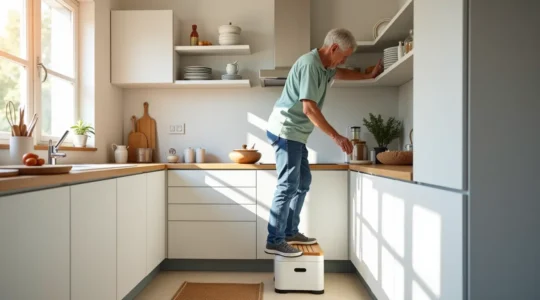
Gutter Cleaning and Bulb Changing: Why These 2 Tasks Cause the Most Ladder Falls
The belief that a quick chore is harmless is a statistical fallacy that lands thousands of seniors in my emergency room. The real choice isn’t between spending a little money or saving it; it’s between a controlled, predictable service fee…
Read more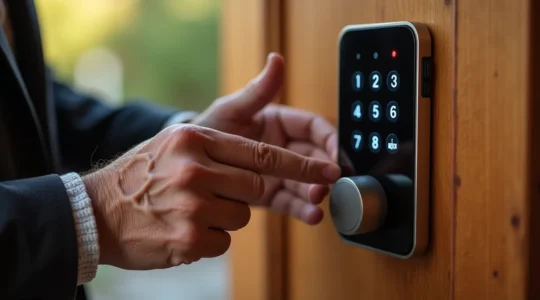
Smart Locks or Keypads: Which Is Truly Easier for Hands with Arthritis?
The best keyless entry system for arthritis isn’t the one with the most features, but the one demanding the least physical and mental effort—what we call low “interaction-cost.” Prioritize large, tactile buttons over sensitive touchscreens that require precise finger contact…
Read more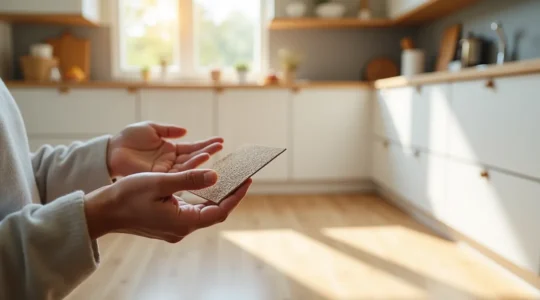
Anti-Slip Treatments vs. Mats: A Technical Breakdown for a Safer Wet Kitchen Floor
The safest floor is not a product you buy, but a system you manage by controlling the physics of friction. Anti-slip treatments chemically alter a tile’s surface to increase its microscopic grip, but their effectiveness depends on proper cleaning. Mats…
Read more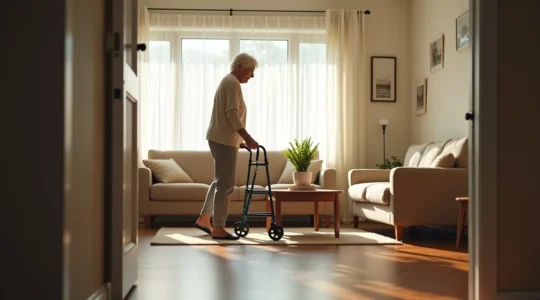
How to Arrange Living Room Furniture to Ensure a Safe Path for a Walker?
The key to a walker-safe home isn’t just tidying up; it’s re-engineering your space based on the physics of movement and cognitive load. Wide, clear pathways are non-negotiable, requiring a minimum clearance that accounts for your walker’s pivot radius. The…
Read more
How to Audit Your Home for Fall Risks in Less Than 2 Hours Without Hiring a Pro?
Most home safety advice offers overwhelming checklists, but a truly effective audit is a diagnostic process of observing behavior to identify and fix systemic risks. Prioritize high-impact, low-cost changes like lighting, which often prevent more falls than expensive renovations. Learn…
Read more