Health & Wellness
Aging brings profound changes to every dimension of health, yet many adults face this transition without a clear roadmap for navigating the complex terrain ahead. The difference between thriving in later life and merely surviving often comes down to understanding how healthcare, physical function, nutrition, and emotional wellbeing interconnect—and knowing which actions to prioritize when energy and attention become precious resources.
This comprehensive exploration examines the foundational pillars of health and wellness for older adults and those living with reduced mobility. From building an effective medical support system to preserving independence through strategic movement, we’ll address the practical realities, common pitfalls, and evidence-based approaches that can transform your experience of aging. Whether you’re managing chronic conditions, concerned about fall risk, or simply seeking to maintain vitality, understanding these core principles empowers you to make informed decisions about your wellbeing.
Building a Proactive Healthcare Foundation: Your Medical Support System
Think of your healthcare approach as constructing a safety net before you need it—not scrambling to weave one mid-fall. The most significant difference between those who navigate age-related health challenges successfully and those who struggle often lies not in genetics or luck, but in the strategic framework they’ve established for medical care.
Why Geriatric Specialists Matter
Geriatricians bring specialized training in the unique physiology of aging bodies. Unlike general practitioners who treat a wide age spectrum, these specialists understand how medications interact differently in older adults, recognize atypical disease presentations (like depression manifesting as physical pain), and prioritize functional independence alongside disease management. Consider how a standard blood pressure target may be inappropriate for someone over 75—geriatric expertise prevents such one-size-fits-all mistakes.
The Telehealth Revolution and When to Meet Face-to-Face
Remote consultations have transformed accessibility, particularly for those with mobility limitations or transportation challenges. Yet knowing when virtual visits suffice versus when in-person examination is essential can prevent dangerous oversights. Video calls work well for medication adjustments, routine check-ins, and mental health support. Physical examinations for new symptoms, annual wellness visits, and anything requiring diagnostic tests demand in-person attendance. The key is matching the modality to the medical need, not merely your convenience.
Why Self-Diagnosis Becomes Riskier With Age
The internet has democratized medical information, but aging complicates symptom interpretation dramatically. What feels like simple indigestion might signal cardiac issues. Fatigue attributed to “just getting older” could indicate thyroid dysfunction, anemia, or depression. Older bodies present illnesses differently than textbooks suggest, making professional evaluation irreplaceable. Use online resources to educate yourself about possibilities, but always let qualified professionals make the actual diagnosis.
Managing Chronic Conditions: Turning Daily Logistics Into Sustainable Routines
Living with ongoing health conditions resembles managing a small business—it requires systems, documentation, and regular review. Most people struggle not because they lack willpower, but because they haven’t created friction-free processes that fit seamlessly into their actual lives.
Medication Management and Dangerous Interactions
The average older adult takes four or more prescription medications, each potentially interacting with the others—and with over-the-counter supplements you might not even consider “real medicine.” A daily pill organizer is essential, but so is maintaining a current medication list that includes dosages, prescribing physicians, and reasons for each drug. Share this list with every healthcare provider, including dentists and specialists. Many serious complications arise when one doctor doesn’t know what another has prescribed.
Digitizing Health Records for Continuity of Care
Paper records get lost, water-damaged, or left behind during medical emergencies. Creating a digital health file—whether through your healthcare system’s patient portal, a scanning app, or simple cloud storage—ensures critical information travels with you. Include vaccination records, surgical history, allergy documentation, and recent lab results. During a medical crisis, this preparation can literally save your life by preventing dangerous drug allergies or duplicate testing.
Family Communication Without Oversharing or Isolation
Finding the balance between keeping loved ones informed and maintaining privacy challenges many adults. Consider establishing regular health updates (monthly check-in calls, for instance) rather than only communicating during crises. This normalizes health discussions and prevents family members from either worrying excessively or being blindsided by serious developments. For progressive conditions, clearly communicating your wishes regarding medical intervention prevents emotionally-charged decisions during acute episodes.
Movement and Mobility: Reclaiming Physical Function Without Pain
Physical activity in later life differs fundamentally from exercise in youth. The goal shifts from performance enhancement to functional preservation—maintaining the strength, flexibility, and balance required for independence in daily tasks.
Starting Safely After Periods of Inactivity
Deconditioning happens quickly but reverses slowly. If you’ve been sedentary, begin with movements so easy they feel almost trivial: standing from a chair repeatedly, walking to the mailbox, gentle arm circles while seated. This isn’t laziness—it’s strategic progression. Tissues need gradual loading to adapt without injury. Water-based exercise provides particular advantages here, as buoyancy reduces joint stress while resistance builds strength. Many community pools offer senior-specific classes where the instructor understands aging bodies.
Walking: The Underestimated Medicine
Research consistently identifies walking speed as a powerful predictor of longevity and functional independence. Gait speed reflects cardiovascular health, muscle strength, balance, and cognitive function simultaneously. Aim to gradually increase both distance and pace, but prioritize consistency over intensity. Even a slow ten-minute walk daily provides benefits, particularly if you’ve been mostly sedentary. Pay attention to your walking pattern—shuffling, asymmetry, or avoiding weight-bearing on one side signals problems requiring professional assessment.
Mind-Body Practices for Balance and Fall Prevention
Falls represent one of the greatest threats to senior independence, yet balance training remains widely neglected. Practices like modified yoga, tai chi, and specific proprioception exercises dramatically reduce fall risk by improving body awareness and reactive stability. Proprioception—your sense of where your body exists in space—naturally declines with age, but responds beautifully to targeted training. Simple exercises like standing on one foot while holding a counter, or walking heel-to-toe along a hallway, rebuild this crucial protective mechanism.
The Recovery Principle Most People Ignore
Aging bodies need longer recovery periods between demanding activities. This doesn’t mean doing less overall—it means strategically spacing efforts. If Monday includes a challenging physical therapy session, Tuesday might focus on gentle stretching rather than another intense workout. Ignoring recovery needs leads to chronic inflammation, injury risk, and the counterproductive boom-bust cycle where you overdo it, suffer for days, then start over. Sustainable progress requires patience with biological realities.
Nutrition and Body Function: Fueling Aging Bodies Effectively
Nutritional needs evolve throughout life, yet many adults continue eating patterns established decades earlier. Understanding these changing requirements—and the common barriers to meeting them—can prevent the muscle loss, frailty, and nutritional deficiencies that complicate aging unnecessarily.
Combating Sarcopenia Through Protein Timing
Sarcopenia—age-related muscle loss—isn’t inevitable, but preventing it requires deliberate protein intake distributed throughout the day. Older bodies process protein less efficiently than younger ones, meaning you need both adequate total amounts (typically 1.0-1.2 grams per kilogram of body weight) and strategic timing. Aim for 25-30 grams of protein at each main meal rather than concentrating it all at dinner. This steady supply provides the building blocks muscles need for maintenance and repair.
Dental Health as a Nutritional Gateway
Missing teeth, ill-fitting dentures, or painful chewing often leads to nutritional compromise as people unconsciously avoid protein-rich meats, raw vegetables, and other difficult-to-chew foods. This creates a vicious cycle: poor nutrition weakens overall health, including oral health, worsening the problem. If dental issues are limiting your food choices, consult a dentist about solutions while simultaneously finding softer protein sources like eggs, fish, Greek yogurt, or well-cooked legumes.
Hydration Strategies for Changing Physiology
Thirst perception diminishes with age, often leading to chronic mild dehydration that exacerbates fatigue, confusion, constipation, and fall risk. Rather than relying on thirst as your guide, establish a hydration schedule: a glass of water with each meal, one mid-morning, one mid-afternoon. Keep water within easy reach throughout your home. If frequent urination concerns you, concentrate fluid intake earlier in the day while reducing evening consumption.
Supplementation: Helpful or Harmful?
The supplement industry thrives on promises, but more isn’t always better—and some combinations prove dangerous. Common deficiencies in older adults include vitamin D, B12, and calcium, yet testing before supplementing prevents both deficiency and toxicity. Some supplements interfere with medications: calcium blocks thyroid medication absorption, vitamin K counteracts blood thinners, and many herbal products interact unpredictably with prescriptions. Always discuss supplementation with your healthcare provider, bringing in the actual bottles to review dosages and ingredients.
Mental Health and Social Connection: The Foundation Beneath Everything Else
Physical health deservedly receives substantial attention, yet emotional wellbeing and social connection often determine quality of life more powerfully than any single medical intervention. Loneliness now carries documented physiological consequences as severe as smoking, while untreated depression complicates every chronic condition.
Why Social Isolation Accelerates Cognitive Decline
Human brains require social stimulation to maintain function, much like muscles need movement. Meaningful conversations, navigating social dynamics, and maintaining relationships activate neural networks that pure mental exercises like puzzles cannot replicate. Research demonstrates that socially isolated individuals experience accelerated cognitive decline and dementia risk comparable to those with established risk factors like hypertension or diabetes. The quality of connections matters more than quantity—one genuine friendship provides more protection than dozens of superficial acquaintances.
Recognizing Depression Beyond Sadness
Depression in older adults often manifests differently than the stereotypical tearfulness and despair. Watch for loss of interest in previously enjoyed activities, persistent fatigue unrelated to physical exertion, changes in appetite or sleep patterns, difficulty concentrating, or unexplained physical complaints. Many older adults grew up in eras that stigmatized mental health struggles, making them less likely to report emotional symptoms directly. Recognizing these alternative presentations enables earlier intervention and prevents the downward spiral where depression undermines physical health, which worsens depression further.
Building Your Psychological Safety Net
Support systems function best when established before crisis hits. This includes identifying mental health professionals you trust, maintaining regular contact with friends or family who understand your situation, and possibly connecting with support groups for people managing similar challenges. These groups—whether for specific conditions like diabetes or broader concerns like aging—provide both practical advice and the irreplaceable comfort of shared experience. Professional therapy isn’t only for severe mental illness; it offers valuable support during major life transitions, grief, or simply developing better coping strategies.
Sensory Changes and Daily Living: Adapting to Maintain Quality of Life
Vision, hearing, and other sensory changes represent normal aging processes, yet their impact on safety, social connection, and independence can be profound when left unaddressed. Accommodation isn’t defeat—it’s intelligent adaptation.
Hearing Loss: More Than Just an Inconvenience
Untreated hearing loss correlates strongly with social isolation, depression, and even dementia risk. When following conversations requires exhausting concentration, many people gradually withdraw from social situations, accelerating the isolation-cognition decline cycle. Modern hearing aids differ dramatically from older models—many connect to smartphones, adjust automatically to different environments, and remain nearly invisible. If you find yourself constantly asking people to repeat themselves, avoiding restaurants because of background noise, or turning up the television volume repeatedly, seek audiological evaluation rather than accepting this as inevitable.
Managing Energy as a Finite Resource
Fatigue management resembles budgeting money—you have limited reserves and must allocate them strategically. This might mean scheduling important activities for your peak energy times (often morning for many people), building rest periods into your day, or accepting that accomplishing three priorities is success rather than failure if you previously attempted ten. Pacing prevents the boom-bust cycle where you push through exhaustion, then require days to recover. Learning to respect your energy limits paradoxically enables accomplishing more over time.
Maintaining Independence While Accepting Support
The fear of dependency drives many older adults to refuse helpful accommodations, viewing assistive devices or help with certain tasks as defeat. Reframe this perspective: using a shower chair prevents falls that could end your independence entirely. Accepting help with heavy housework preserves energy for activities you value more. Strategic accommodation extends independence rather than diminishing it. Focus on maintaining autonomy in areas most meaningful to you, accepting support where needed to protect that larger goal.
Health and wellness in later life isn’t about fighting inevitable decline—it’s about understanding how aging bodies function differently and adapting your approach accordingly. The strategies that protected your health at 30 may prove inadequate or even counterproductive at 70. By building proactive healthcare relationships, creating sustainable systems for managing chronic conditions, moving strategically rather than avoiding activity altogether, fueling your body appropriately, protecting mental health as zealously as physical health, and adapting intelligently to sensory changes, you maintain the autonomy and quality of life that matter most. Each area discussed here contains depths worth exploring further based on your specific circumstances and priorities.

How to Reclaim the Ability to Put on Socks Without Sitting Down?
Losing the ability to put on your socks isn’t just an inconvenience; it’s a critical warning sign that your body’s foundational movement system is breaking down. This decline is caused by specific muscle weakness (glutes, core) and stiffness (hip flexors),…
Read more
How to Hit 30g of Protein per Meal When You Have a Smaller Appetite?
In summary: Focus on protein density, not just volume, choosing foods that pack more protein into every bite. Prioritize whole foods like Greek yogurt and fatty fish, as their natural structure enhances nutrient absorption. Make breakfast your most important protein…
Read more
Why Is Tai Chi Statistically the Most Effective Exercise for Fall Prevention?
Contrary to the belief that it’s just “slow waving,” Tai Chi is a clinical powerhouse for fall prevention because it systematically retrains your brain’s connection to your muscles. It’s not about muscle strength alone, but about improving the body’s internal…
Read more
How to Start an Exercise Routine at 65+ If You Haven’t Worked Out in Decades?
The greatest barrier to starting exercise after 65 isn’t age; it’s the fear of pain, which can be overcome by learning to understand your body’s unique signals. Gentle, supportive exercises like aqua aerobics can build initial confidence by removing joint…
Read more
Why Is Chronic Loneliness as Dangerous for Your Heart as Smoking 15 Cigarettes a Day?
Chronic social isolation is a physiological threat, not merely an emotional state; it actively triggers inflammatory and neurodegenerative processes comparable to major clinical risk factors. Scientific data shows loneliness accelerates cognitive decline, increases cardiovascular strain, and weakens the immune system…
Read more
How to Find Emotional Support When You’ve Always Been the Strong One
Emotional support is not an admission of weakness; it’s a strategic system you build to protect your long-term strength and independence. The most effective support tools are practical, logical, and can be “engineered” to fit your life. Ignoring emotional needs,…
Read more
The Senior’s Diabetes Toolkit: Navigating Daily Challenges with Confidence
In summary: Managing diabetes in later life is less about restriction and more about building a toolkit of practical, empowering strategies for daily situations. Proactive daily habits, like a 10-second foot scan, are more effective at preventing complications than reactive…
Read more
How to Lower Your Blood Pressure by 10 Points Without Adding New Medication?
Contrary to common belief, significant blood pressure reduction isn’t just about drastic salt cuts or exhausting cardio. The key lies in precise, evidence-based “micro-calibrations” to your daily routine. Mastering the sodium-potassium balance in your diet often yields better results than…
Read more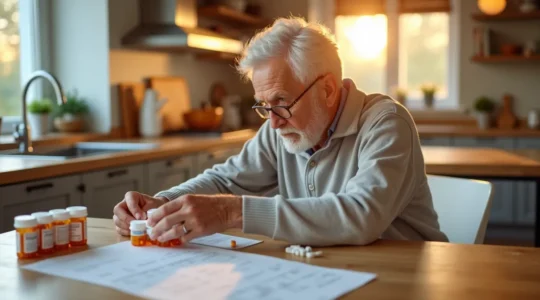
How to master a complex medication schedule: a pharmacist’s system for taking 5+ pills daily
In summary: Managing multiple medications is a systems problem, not a memory problem. Success requires designing a personal health system. Proactively identify and manage “interaction hotspots,” especially between medications and supplements, by creating a timing schedule. Use simple technology, like…
Read more
How to Build a Medical “Dream Team” Before You Actually Get Sick?
The key to healthy aging isn’t just seeing doctors; it’s becoming the proactive CEO of your own health by building a coordinated system before a crisis hits. Your “Dream Team” is more than a list of specialists; it’s a collaborative…
Read more